A street camera becomes a license plate reader
Traffic observing cameras are installed across the US, including an estimated 115,000 to 131,700 license plate readers in major metropolitan areas and along key road networks.
These automated license plate readers (ALPRs) are deployed and in use by hundreds of law enforcement agencies, businesses, and communities in both urban and rural locations.
California has the highest concentration with over 16,000 readers, followed by Florida (7,169), Georgia (7,046), and Illinois (5,822). A database tracking these readers includes devices from 85 different brands, though the data is crowdsourced and likely under-represent the actual total number of active cameras. Flock is the dominant manufacturer. The company is based in Georgia and valued at over 8 Billion.
The cameras, including the one somewhere near you right now, don’t care if you’re speeding, they don’t write tickets, heck, it might not even be recording actual video.
But the moment your car rolls past, it can read your license plate, guess the make, model, color and body style, log the exact time, location, and direction. It will then send that data over the cellular network to a central computer and make the whole event searchable in just seconds.
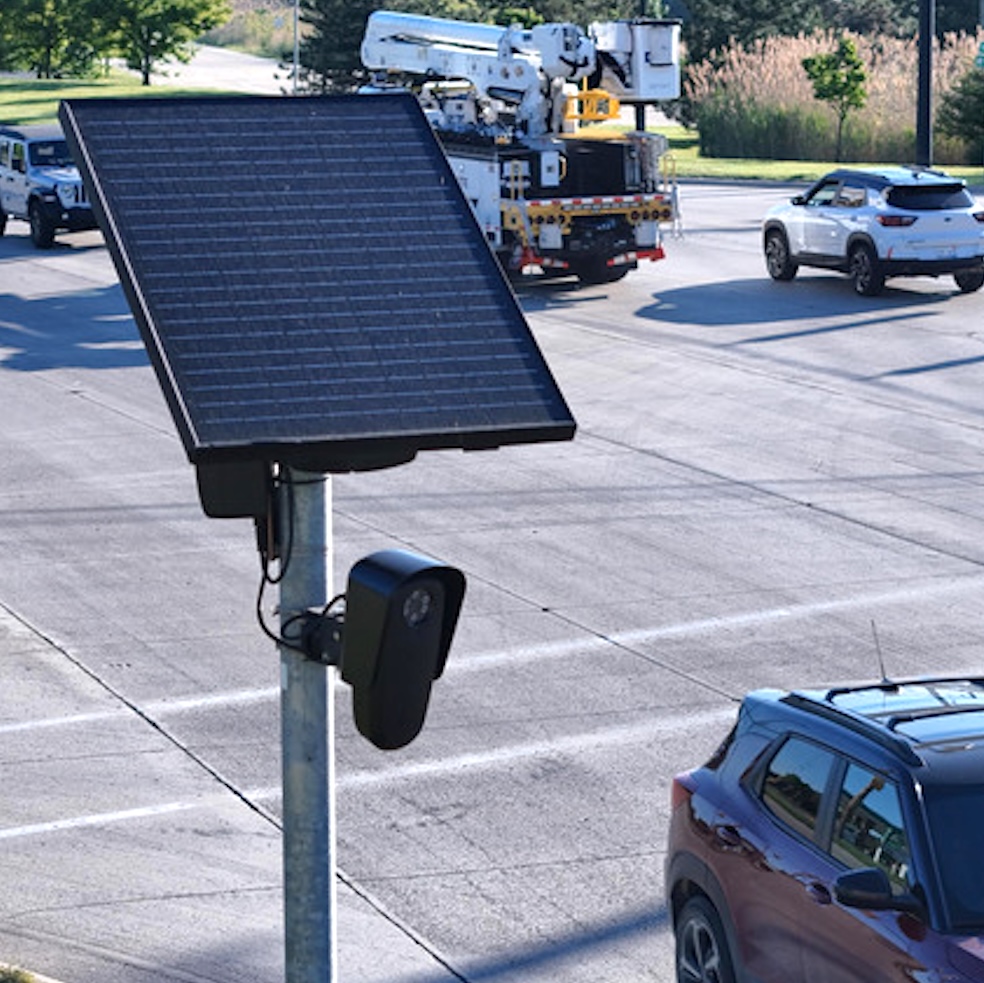
The Guardian newspaper identified at least 33 instances of people damaging, vandalizing or destroying Flock cameras in the US, across 23 states.
Nothing new
And this surveillance has been going on for a while. EFF research shows that 173 agencies from 23 states and the federal government accounted for roughly 2.5 billion license plate scans in 2016 and 2017. The remaining 27 state agencies refused to turn over reports on how much data they collected.
Police departments say these systems help recover stolen vehicles, find missing people, catch getaway cars, and turn a vague gray SUV witness description into real investigative leads.
Privacy advocates counter that the same network quietly builds a searchable record of where everyday people drive, without asking permission, without probable cause and without a warrant.
Cities using AI-based camera systems like Flock often end up collecting far more data than is truly necessary, and that creates real concerns about privacy, misuse, and the lack of proper oversight. It’s surveillance without a warrant and a possible violation of 4th amendment rights.
The camera is only the beginning
Indeed the camera itself is the least interesting part, except perhaps for embedded engineers.
Physically, it is a compact roadside camera that can be installed without trenching in power or network cabling. Many installations use a solar panel for power and an LTE cellular modem for connectivity, which means a camera can be placed at a subdivision entrance, an intersection, a parking lot, or a rural road, without waiting for somebody to pull ethernet through the sewer system.
The Flock company handles much of the installation and operates the system as a subscription service, rather than merely selling a camera in a box. And this service architecture is one reason the system has spread so quickly.
Traditionally municipal camera projects become miniature public works programs involving poles, permits, power drops, fiber, network closets, and a conference room full of people debating, who owns a conduit?
A self-contained solar and cellular node skips much of that and with the Flock company handling the data processing, it’s essentially an IOT, Internet Of Things, device with a police badge.
A vehicle’s fingerprint
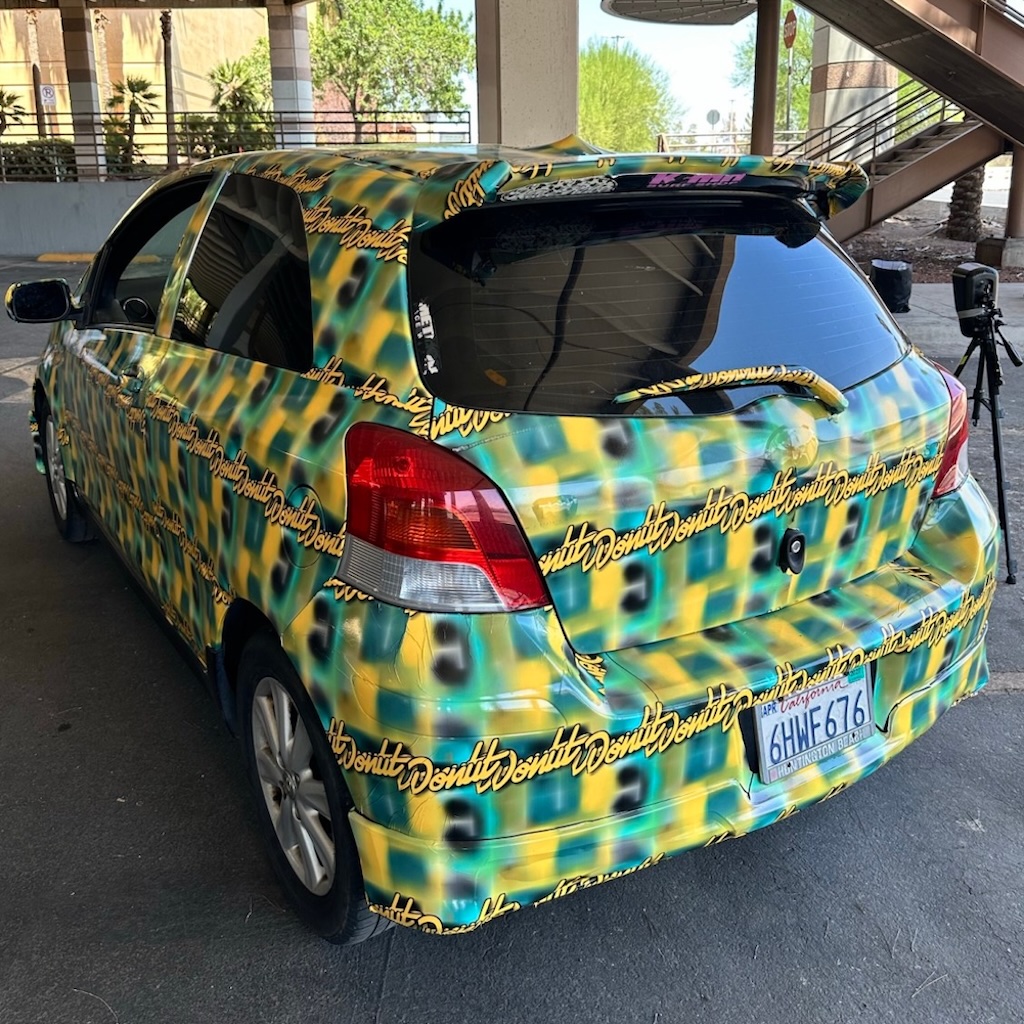
Flock refers to the collection of characteristics from the image as a vehicle signature or a vehicle fingerprint. Its current search tools can use plate numbers, partial plates, make, model color, location, time, and create a natural language descriptions, such as a white sports car with a black racing stripe, a Raiders sticker on the rear window and a dent in the rear bumper.
A central database
The Flock company also advertises location searches, convoy analysis, hot lists, custom alerts, and real-time routing tools.
Now, for some, it matters a lot where the characterization is actually done. If it’s all happening on the device using an entirely local AI model, that would be technically impressive. That’s a lot of AI juice to squeeze for a little box like this. It would mean that the images of you in your car never has to leave the camera box.
Insofar as I can tell, every detection forwarded, contains both an image and a set of extended attributes about that image. At the central server end, additional attributes are being assigned.
And speed matters, not of the vehicle, but of the report. A stolen vehicle report that’s checked manually tomorrow is just an investigative record, but a detection delivered to an officer 30 seconds after the car passes an intersection can become an interception. And an interception can solve or prevent a crime.
Police departments using these systems describe them as valuable for recovering stolen vehicles, locating missing or endangered people, responding to crimes in progress, corroborating timelines, and identifying vehicles where witnesses can provide only a partial description.
Unfortunately there are also some reports of police using their access to stalk girlfriends.
In around 80 localities in the US, contracts with Flock have recently been cancelled or not renewed in response to privacy concerns.
If the density of cameras is sufficient it becomes possible to get a fairly accurate profile of the driver of a certain car. Which church they visit, what shops they park nearby, where their likely home and place of work is, what other, if any, place they visit regularly, etc.
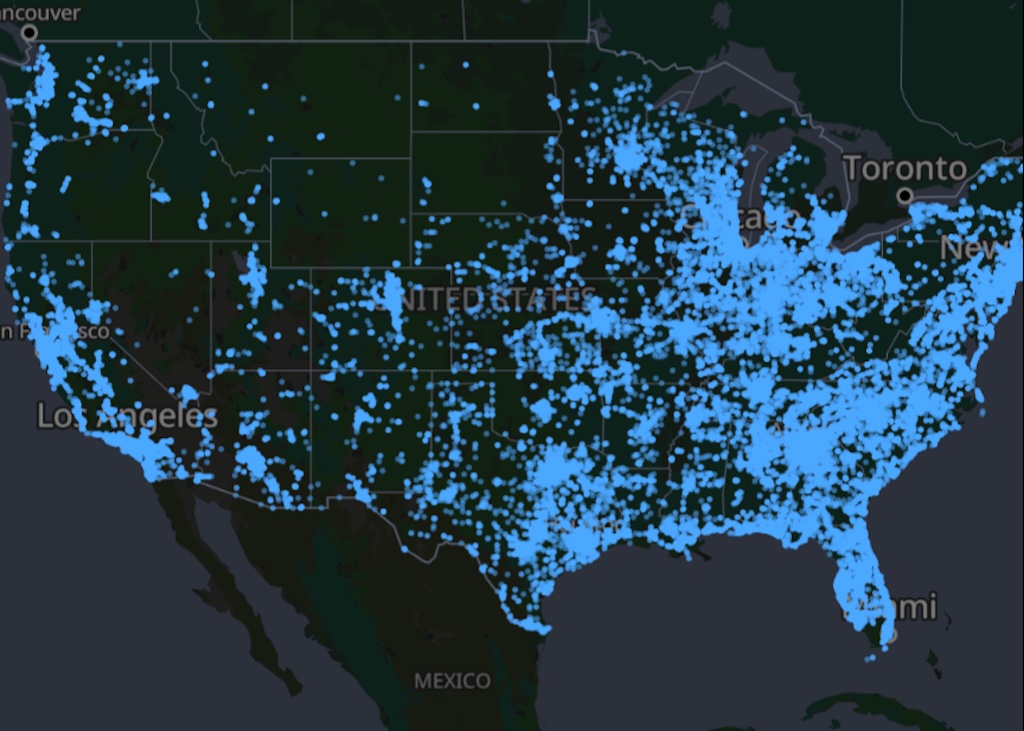
Here’s a Map of US camera locations
False positives, debatable accuracy
ACLU research computes that far less than 1% of cars scanned by ALPRs are connected to any crime or wrongdoing. So, more than 99% of cars are swept up in this dragnet surveillance method.
And then there is accuracy of identification. For example, some research showed that 10% (= 100 in every 1000 images) of license plates scanned by Flock readers misread the state.
Rain, glare, darkness, plate frames, dirt, motion blur, unusual fonts, damage, viewing angle, and visually similar characters can all affect the read.
Some cities reports successful recoveries and arrests, although attributing a change in overall crime rates, specifically to cameras, is much harder than documenting individual cases in which a detection was actually useful.
Those who minimize the potential privacy invasion by this system say that drivers can not have an expectation of privacy when a license plate attached to their car is displayed openly on a public road.
Proponents of this surveillance also argue that the camera does often not know (as in: has likely no clear image of) who is actually driving.
Additionally they point to Flock’s default retention period for license plate data, which was 30 days.
In August 2026 Flock announced they are reducing the default retention data of data from 30 days to 7 days.
Legislation
As of early 2026, approximately 16 states have enacted specific statutes regulating ALPR data retention, usage, and data sharing (including logging of all searches), while others rely on general privacy laws or departmental policies.
Interestingly, statistics have shown that while the number of ALPRs has increased significantly, the percentage of, for example, stolen cars being returned to the owner has not increased, but instead dropped by a fair number.
In around 80 localities in the US, contracts with Flock have recently been cancelled or not renewed in response to privacy concerns. In other instances contracts are being refined with regard to data retention, data access and reporting requirements of access.
Activists disabling the ALPRs
NoMark, as he’s known on Instagram, was pretty nervous the first time he tried to knock out a Flock camera. Now he is getting pretty good at it. Climbing the pole, taping the camera lens to block it and snapping some wires only takes a couple of minutes. He estimates to have disabled more than a dozen cameras.
The Guardian newspaper identified at least 33 instances of people damaging, vandalizing or destroying Flock cameras in the US, across 23 states.
Flock is not the only manufacturer
Flock provides one of the most widely used ALPR turn-key systems, but they aren’t the only company trying to make a buck by spying on us. Axon, Vigilant Solutions (a subsidiary of Motorola Solutions), Genetec, PlateSmart, Innova Systems, Rekor, ELSAG, Perceptics, and Jenoptik are a few of the other leading companies selling ALPRs to police, private companies, and others.
Getting used to it
A flock camera may help locate a parent or family member abducting their child one moment and record a 1000 completely ordinary errands the next.
Both facts can be true.
Its usefulness and its threat comes from remembering events that would otherwise never have been recorded or be forgotten.
Its privacy implications come from exactly the same feature.
The machine does not resolve that tension for us. It merely puts it into a database.
Opposing this dragnet type of surveillance seems natural. Assuming the legal notion remains that a person can not have a presumption of privacy when being on a public road.
At a minimum, the data retention period should be as short as possible, searches through the data should be restricted, and the use of this data should be audited with these audit results made publicly available.